Food safety and commercial cleaning experts in Brampton assist you in maintaining dining venues, commissaries, bakeries, warehouses, and food service units to code. They disinfect high-touch points, food-contact surfaces, equipment, floors, drains, restrooms, and food handling zones with approved chemicals, proper dilution, and recorded contact times.
Essential Summary
- Brampton food safety cleaning experts maintain restaurants, grocery departments, commissaries, warehouses, bakeries, schools, mobile vendors, and allergen-sensitive operations.
- High-touch surfaces, food-contact equipment, kitchens, floors, drains, restrooms, and storage areas are cleaned using sectional methods to avoid cross-contamination.
- Approved vendors verify proper chemical concentration, appropriateness, and exposure duration, then file completion with checks, assessments, and correction logs.
- Hygiene timelines must follow risk, output capacity, format changes, releases, and standards, with regular, weekly, and cyclical tasks assigned by section.
- Opt for providers with HACCP, health regulatory, understanding, WHMIS, preparation, insurance, testimonials, color-categorized implements, and inspection-ready hygiene records.
Which Brampton Operations Need Food Safety Cleaning?
You must comply with food safety cleaning if your operation is subject to public health inspection, food premises regulations, or internal HACCP-based controls. This covers restaurants, cafeterias, commissaries, grocery food departments, butcher shops, seafood counters, convenience stores, and institutional kitchens.
You also need documented food sanitation in distribution centers, food processing plants, freezer facilities, commercial bakeries, educational nutrition programs, event spaces, and catering hubs. Temporary and mobile establishments count too, including catering trucks, festival vendors, and pop-up food booths. If your staff handle ingredients, section prepared foods, heat finished items, or keep allergens stored, your facility needs established sanitation documentation. In Brampton, cleanliness isn't elective; it's part of regulatory, business, and safety compliance.
What Services Do Brampton Cleaning Experts Provide?
Your facility requires professional cleaners who disinfect frequently contacted surfaces, cooking and food prep areas, floors, and restrooms to maintain food safety compliance and public health standards. These specific areas are emphasized due to their elevated cross-contamination potential, trip and slip dangers, and violations of hygiene standards.
Knowing their service areas enables you to validate your operation's sanitation satisfies required standards and regulations.
High-Touch Surface Cleaning
base sterilization schedules according to usage patterns, exposure levels, and facility operations.
testing surfaces to confirm cleaning results
Kitchen Areas, Floor Surfaces, and Bathroom Spaces
Expect Brampton cleaning experts to target kitchens, floors, and restrooms because each area carries distinct foodborne illness prevention, slip-and-fall, and sanitation risks. In industrial kitchens, you need degreasing on cook lines, equipment exteriors, drains, prep surfaces, and splash zones to reduce bacterial growth and pest activity.
You should also expect documented floor care. is also provided as part of the service.
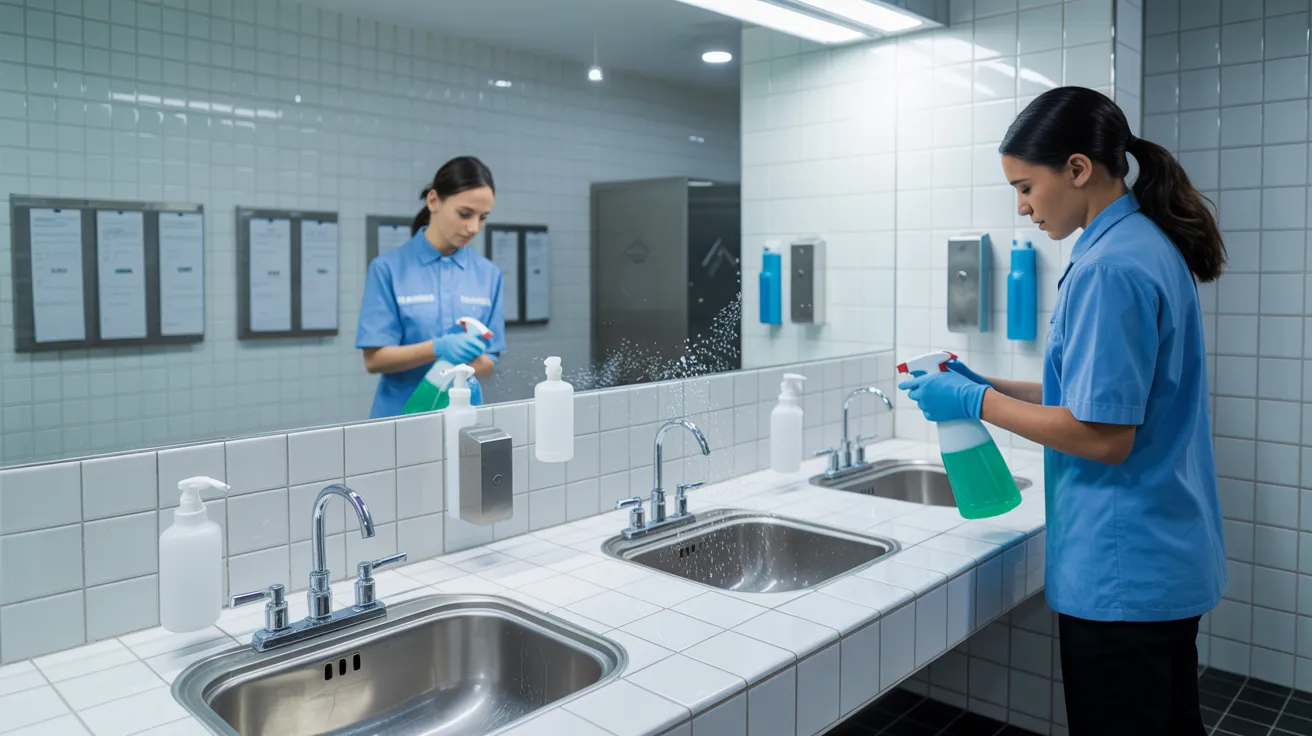
Restroom cleaning requires disinfecting touchpoints, fixtures, partitions, dispensers, and waste containers, replacing items and managing smells. They also maintain restaurant cleaning supply rooms where product storage, sink cleanliness, and drain systems impact daily sanitation standards and worker protection.
How Food Safety Cleaning Benefits Brampton Operations
Brampton businesses need to implement proper sanitation practices for satisfying legal standards and obtaining approval. You also reduce bacterial spread through proper cleaning of food-preparation surfaces, appliances, and frequently-touched items. Most importantly, you help protect community wellness by reducing the chance of food poisoning in your establishment.
Food Safety Regulations
Food companies in Brampton face mandatory safety protocols, making food safety cleaning vital to fulfilling health code requirements, safeguarding patrons, and eliminating enforcement action. You must maintain clean food preparation areas, written maintenance records, safe chemical management, and traceable training practices that correspond to municipal and provincial inspection expectations.
Comprehensive cleaning measures aids in controlling allergens by minimizing residue buildup on shared equipment and commonly contacted zones.
Cross-Contamination Prevention
Maintaining health code standards copyrights on your power to stop cross-contamination during everyday food preparation and sanitation. You must separate raw ingredients from ready-to-eat foods, sterilize work zones between assignments, and store chemicals away from food-contact items. Explicit protocols lower contamination threats and reinforce steady complete article regulatory adherence.
Building allergen segregation prevents key allergens from reaching common workstations, storage, or apparatus. Leverage separate cutting boards, colored implements, and strict utensil labeling so team members won't blend products in cooking or serving.Enforce handwashing after handling raw meat, seafood, eggs, or allergen-containing products. Refresh cleaning cloths frequently, and confirm sanitizer strength with test strips. When your team follows these practices every shift, you create a cleaner, safer operation that meets Brampton's food safety expectations consistently.
Public Health Defense
When sanitation protocols fails, you don't just face inspection failure—you heighten the likelihood of foodborne illness affecting customers, staff, and the wider Brampton community. You also weaken your role in safeguarding community wellness, especially in high-traffic food premises where pathogens travel quickly through surfaces, equipment, and touchpoints.
You depend on cleaning procedures that eliminate contaminants, properly disinfect, and verify results. This involves maintaining contact periods, deploying approved disinfectants, maintaining records, and coaching staff to fulfill compliance standards. These actions support pathogen control by reducing microbes before affecting food surfaces or hands. In Brampton, robust sanitation shields vulnerable populations, curtails outbreak likelihood, and demonstrates accountability. When you adhere to proper protocols, you go beyond regulations—you substantially reduce risk and advance safer food handling throughout the city.
Why Is Cleaning Essential for Food Safety Compliance?
Adopting thorough cleaning protocols reinforces food safety compliance by minimizing contamination hazards, preventing pathogen multiplication, and positioning your facility in accordance with sanitation requirements under HACCP-based programs and public health regulations. You verify that food-handling surfaces are visibly clean and microbiologically controlled, enabling documented preventive controls and inspection readiness.
Cleaning initiatives additionally fortify allergen prevention by removing residues that can cause undeclared allergen exposure.
How Do You Arrange Commercial Cleaning Services?
maintenance activities.
schedule cleaning right before and immediately [[after for successful event turnaround.
Selecting the Right Brampton Cleaning Experts: Key Considerations
Begin by evaluating providers based on food-safe sanitation requirements—not solely on budget. You should confirm that each organization comprehends CFIA, public health, and HACCP-based requirements applicable to your facility. Request proof of insurance, WHMIS compliance, staff training documentation, and oversight procedures. Assess whether technicians recognize cross-contamination risks, chemical handling protocols, and verifiable sanitation records.
You should further examine service consistency and accountability. Request references from food facilities in Brampton, then review response times, corrective-action procedures, and communication standards. Validate the company supports supplier audits and can present inspection-ready documentation to authorities or external parties. Confirm equipment is maintained, colour-coded tools are used appropriately, and facility-specific risks are identified. A experienced service protects compliance, product integrity, and your reputation in the market.
Which components are contained in a hygiene cleaning program?
Create a documented plan that makes clear every sanitation task, standard, and responsibility before production begins. You should detail cleaning schedules, authorized chemicals, concentration levels, contact duration, implements, and validation techniques for each zone, surface, and piece of equipment. Include pre-operational inspections, corrective actions, and employee training requirements.
Your plan should also focus on contamination prevention controls, waste handling procedures, pest management measures, and written schedules for restrooms, drains, floors, and food-contact areas. Detail how you'll separate raw and ready-to-eat processes, facilitate ingredient tracking, and ensure accurate allergen labeling through validated cleaning between product changes. You should assign accountability, keep signed records, and review results against regulatory standards, HACCP controls, and customer requirements. When gaps appear, modify procedures immediately and instruct staff.
Commonly Asked Questions
Are cleaning services offered for nighttime operations in Brampton properties?
Yes, you can arrange sanitation coverage to manage overnight shifts in Brampton facilities. You'll coordinate nighttime cleaning around production schedules, security measures, and staffing requirements. Services generally map overnight logistics to minimize interruption, maintain standards, and document completed tasks. You should confirm arrival timeframes, supervision, lockout procedures, and waste handling before beginning service. If you operate controlled environments, you'll also want cleaning records that support inspections and internal quality assurance.
Do Brampton cleaning experts provide hazard containment solutions?
Yes, you can find many Brampton cleaning experts who offer emergency spill response solutions. They handle contamination, assess risks, isolate affected areas, and start rapid decontamination to minimize risk and prevent business interruption. You should confirm response times, professional credentials, safety procedures, and waste management. If your facility must comply with industry standards, choose a provider that documents incidents, maintains regulatory procedures, and enables compliance verification.
Can green disinfectants be utilized safely on food preparation areas?
Definitely, green disinfectants perform safely on food preparation areas if you select items marked food-safe that comply with regulatory requirements. You ought to validate contact duration, dilution rates, and rinse procedures ahead of deployment. Plant based formulas minimize chemical burden, but you need demonstration of efficacy against target microorganisms. To maintain residue-free conditions, follow exact manufacturer guidelines and verify your disinfectant adheres to applicable food industry sanitation standards.
Can cleaning schedules be customized for seasonal variations?
Yes, you can tailor maintenance plans for seasonal production changes. You should modify schedules, labor allocation, disinfectants, and confirmation procedures to correspond to seasonal workflows while upholding regulatory adherence. You'll minimize production downtime by planning sanitation around changeovers, high demand periods, and usage patterns. You should additionally update SSOPs, staff education, and environmental monitoring to address transient threats, new allergens, or increased soil loads. Ongoing evaluations keep your plan current.
Will professional cleaning services teach your staff on sanitation best practices?
Indeed, commercial cleaning providers often offer staff training on sanitation best practices. Your team obtains training on proper chemical use, contact times, cross-contamination prevention, equipment breakdown, and record-keeping. They generally adhere to instruction with HACCP, GMP, and CFIA or regional health standards criteria. Many perform sanitation audits to verify compliance, reveal issues, and reinforce corrective actions. This supports you in establish reliable processes, pass inspections, and decrease foodborne illness risks each day.
Summary
By collaborating with Brampton commercial cleaning and food safety experts, you aren't simply tidying—you keep your operation inspection-ready and your standards in compliance. From production areas to kitchen zones, every sanitized surface and organized space decreases contamination and avoids expensive losses. By arranging service at appropriate intervals and following a documented cleaning plan, you protect staff members, clients, and your standing. In a heavily controlled environment, clean spaces must be prioritized—they're key to business compliance.